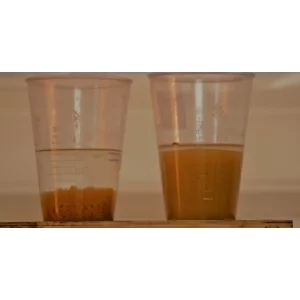
Flocculants are chemical agents used to aggregate fine suspended particles in water, forming larger and heavier clusters known as flocs. These particles are often too small to settle on their own, but flocculants bind them together, making removal through sedimentation, filtration, or flotation much easier. They play a crucial role in improving water clarity, reducing turbidity, and enhancing the efficiency of downstream treatment processes.
In water and wastewater treatment, flocculants are widely used after coagulation to strengthen and enlarge the flocs formed. They help in removing organic matter, colloids, dyes, heavy metals, and other impurities from municipal, industrial, and agricultural wastewater streams. Depending on the application, flocculants can be anionic, cationic, or non-ionic polymers, each designed to work effectively under specific water chemistry conditions.

Orange Chemicals is a sister concern of Chem Fert Chemicals, Which is a leading manufacturer, importer, stockist, reseller and Exporter of all Drilling Chemicals in UAE.



Copyright © 2022 | Orange Chemicals FZ LLC | All Rights Reserved